Spencer winters are hard on plumbing. January highs average around 26°F, overnight lows average around 9°F, and the area sees roughly 42 inches of snow a year, along with regular subzero stretches and strong northwest winds. Here is what that weather does to your pipes and water heater, how to spot trouble early, and what to do when a pipe freezes or bursts.
At What Temperature Do Pipes Freeze?
Water freezes at 32°F, but pipes inside your home usually need colder conditions before they freeze solid. As a general rule, pipes in unheated or poorly insulated areas are at risk once outdoor temperatures fall to about 20°F or lower. In Spencer, that describes most nights from December through February.
Wind makes the risk worse. A steady wind pulls heat out of exterior walls, crawlspaces, and rim joists much faster than still air does, so a pipe that holds up fine on a calm 10°F night can freeze on a windy one.
How Long Does It Take for Pipes to Freeze?
An exposed pipe in an unheated space can begin to freeze in as little as six to eight hours of subfreezing temperatures. Pipes inside exterior walls or under sink cabinets take longer, but a long cold snap or a failed furnace overnight is plenty of time. This is why frozen pipes so often show up first thing in the morning.
How to Tell if Your Pipes Are Frozen
The most common sign is a faucet that produces little or no water during cold weather while other fixtures work normally. You might also notice frost on an exposed pipe, a bulge in the pipe, a strange odor coming from a drain, or a damp spot on a wall or ceiling near an exterior wall. If a single faucet is affected, the frozen section is usually on the line feeding that fixture. If the whole house is out, the problem may be closer to where the main line enters the home.
How to Thaw Frozen Pipes Safely
Before you start, locate your main water shutoff valve and be ready to close it. If the pipe has already cracked, water will start flowing the moment the ice melts.
Open the faucet the frozen line feeds so melting water and steam have somewhere to go. Then apply gentle heat, starting at the faucet end and working back toward the frozen section. A hair dryer, a heating pad, or towels soaked in hot water all work well. Keep warming the pipe until full water pressure returns, then check the area carefully for drips.
Never use a propane torch, open flame, or other high-heat source to thaw a pipe. It is a serious fire hazard, and rapid heating can damage the pipe and its joints. If the frozen section is inside a wall, under a slab, or somewhere you cannot reach, call a plumber.
What to Do if a Pipe Bursts
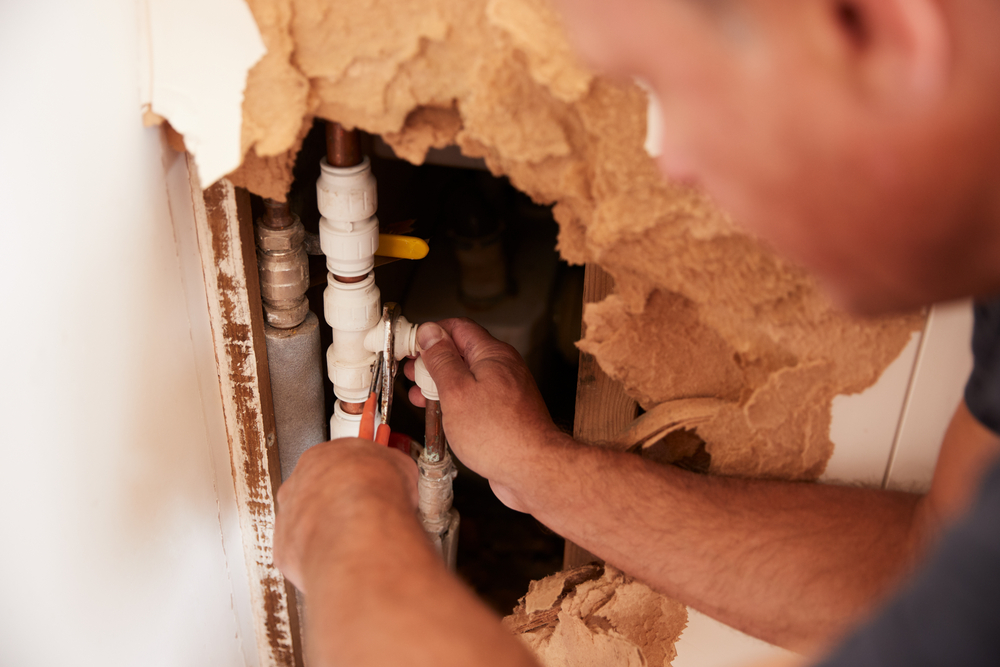
A burst pipe can release hundreds of gallons of water in a short time. Shut off the main water valve right away. If water is near outlets, appliances, or your electrical panel, turn off power to the affected area if you can do so safely. Move belongings out of the way, start soaking up standing water, and take photos of the damage for your insurance company. Then call for emergency plumbing service. CW Suter offers 24/7 emergency service, and our team can locate the break and complete frozen pipe repair so you can get your water back on.
Watch for Hidden Damage After a Freeze
Some cracks are small enough that they only seep. A pipe that froze and split inside a wall can leak slowly for weeks before you notice. After any freeze, keep an eye out for water stains, peeling paint, a musty smell along exterior walls, warped flooring, lower water pressure, or a water bill that rises without explanation. Catching a slow leak early prevents mold and costly structural repairs.
Why Your Water Heater Struggles in Winter
If your water heater is not getting hot enough in January, cold weather is often part of the reason. The water coming into your home is much colder in winter, so the heater has to work harder and run longer to reach the set temperature. Water heaters in unheated garages or basements also lose more heat through the tank.
Sediment buildup adds to the problem, and minerals can settle at the bottom of the tank and act as a barrier between the burner and the water, which leads to rumbling sounds, slower recovery, and higher energy use. If your hot water runs out faster than it used to, the water is lukewarm, or you see rust or moisture around the base of the tank, have the unit inspected. A water heater more than 10 years old that is showing these signs may be due for replacement.
Preventing the Next Freeze
Once your plumbing is back in working order, a few simple steps will help keep it that way. Insulate exposed pipes, seal drafts near plumbing, disconnect garden hoses, keep the thermostat at 55°F or higher, and make sure your furnace is running reliably. A yearly visit through our maintenance plan also helps, since a furnace that quits overnight is one of the most common reasons pipes freeze.
Plumbing Help in Spencer, Iowa

CW Suter has served northwest Iowa for nearly a century, and our Spencer team knows what local winters do to a home’s plumbing. From thawing frozen lines and repairing burst pipes to water heater service and leak repair, we help homeowners in Spencer, Everly, Dickens, Royal, and Ruthven get through the cold months without costly surprises.
Contact CW Suter for plumbing service in Spencer, IA and schedule an appointment online for a free, no-obligation quote. For a frozen or burst pipe, 24/7 emergency service is available at (712) 262-1514.